




Social media has been flooded with misleading content regarding net short positions on Ethereum futures (ETH) on the Chicago Mercantile Exchange (CME) in recent times. Some accounts with numerous followers have misinterpreted this data, suggesting extremely bearish investor sentiment and hinting at possible short squeezes.
Although the data shows an increase in short positions, it is crucial to put this in context. Many institutional investors adopt ‘delta-neutral’ trading strategies, such as ‘basis trading’ or arbitrage. In these operations, one buys the asset in the spot market or via ETFs and, at the same time, opens a short position on futures. The objective is to profit from the funding rate that long futures traders pay to maintain their positions during bullish markets, while maintaining a neutral exposure by hedging their positions.
Recently, Ethereum ETFs have seen significant inflows. For example, on 3 February 2025, Ethereum ETFs in the US reached a record trading volume of $1.5 billion, surpassing the previous peak of $1.22 billion in December 2022.
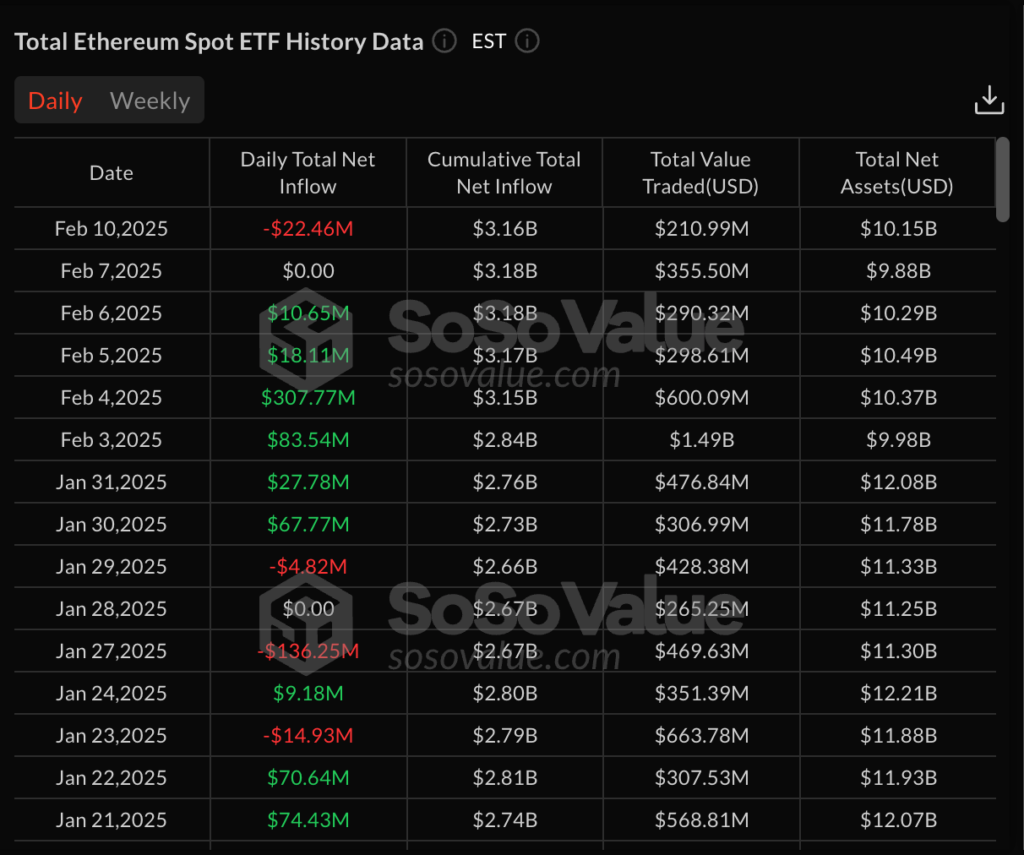
These inflows do not necessarily indicate bullish sentiment, but may be part of the arbitrage strategies mentioned. Therefore, interpreting the increase in short positions as a signal of pessimism about the future of ETH is misleading. Many institutional investors prefer to obtain stable returns through delta-neutral strategies rather than directly exposing themselves to ETH volatility.
It is essential to analyse the data in context and understand the underlying strategies before drawing hasty conclusions, especially for those approaching a ‘young’ asset type like cryptocurrencies and following profiles of influencers who are only looking for a few more clicks.
We at Blockworld suggest following this profile, which is among the most knowledgeable in both the web2 and web3 sectors from which we have drawn inspiration for this article:
The poor quality of content on social, when not outright misinformation, has now reached embarrassing levels.
The saddest thing is that it almost always happens by accounts with hundreds of thousands of followers, whose posts reach millions of… pic.twitter.com/b7LDvyrLlu
– Cristian Palusci (@Criv81) February 10, 2025


