
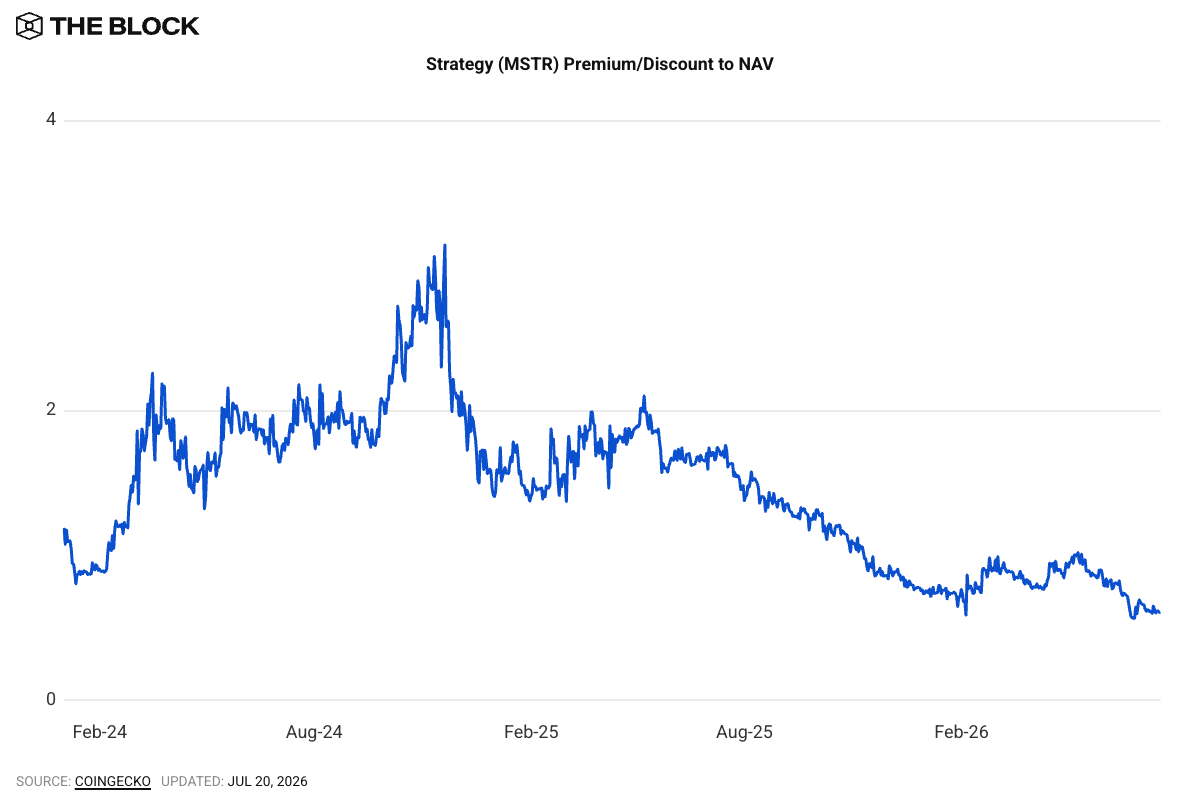
Strategy remains the most delicate case in the traditional crypto market, as its stock market valuation continues to reflect a financial structure that is more complex than simply holding Bitcoin as a cash reserve. The company has a market capitalisation of just under $35 billion against a BTC portfolio of around $54.5 billion, but that direct comparison overlooks the $6.7 billion in convertible bonds and the $15.5 billion in preference shares that rank above ordinary shareholders. If enterprise value is used, the picture changes and the mNAV rises to around 1.03x, a sign that the market is not discounting Bitcoin, but rather the weight of leverage. The real problem is psychological rather than accounting: selling BTC to buy back shares might make sense mathematically, but on Strategy it risks being interpreted as a sign of systemic weakness.
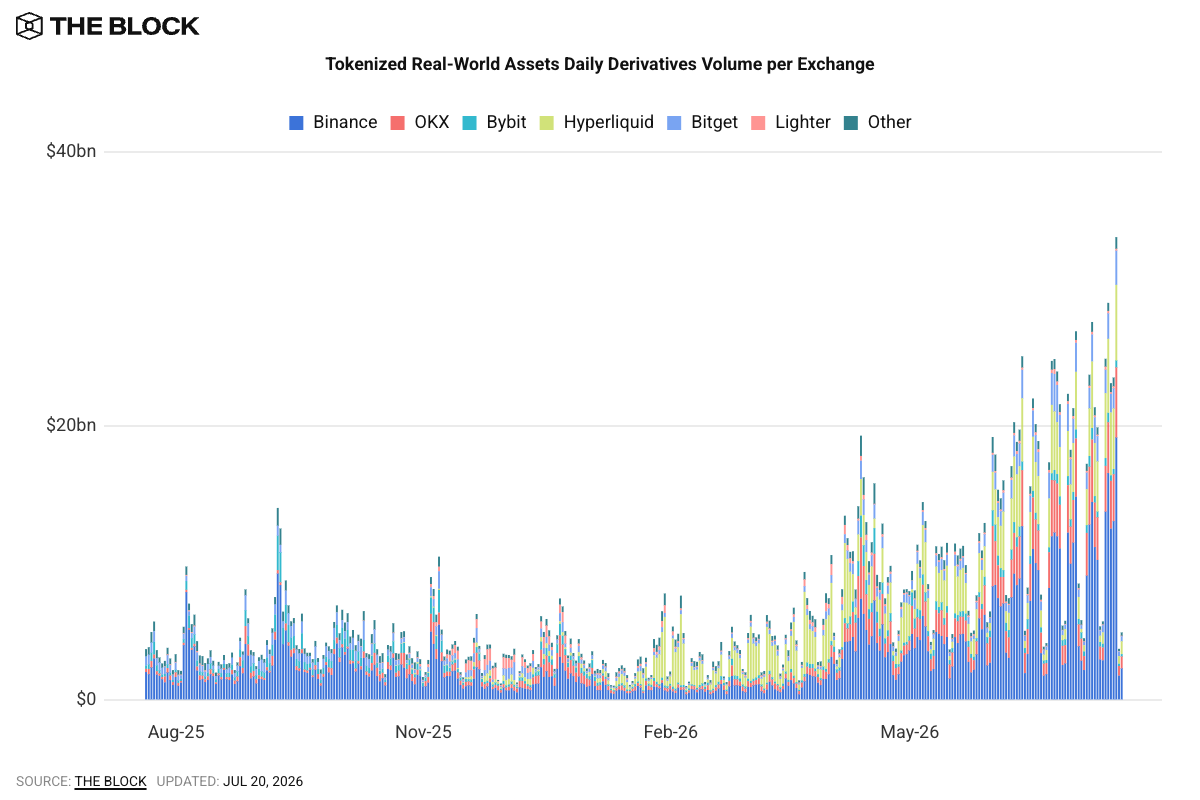
On the other hand, tokenised real-world assets (so-called RWAs)are the standout story of the year. Monthly volumes have risen from around 85 billion in January to around 470 billion in June, a 450 per cent surge in six months. Within this category, tokenised shares are outperforming commodities, driven by pre-IPO securities and well-known names such as MU, SNDK, SK-HYNIX and INTC. In June, SPCX even led crypto trading with over $66 billion in volume following its mid-month IPO. Here, Ethereum remains the natural infrastructure for institutional flows, but the real difference lies in the speed of listing and 24/7 availability, with Hyperliquid taking an increasingly prominent share of the market.
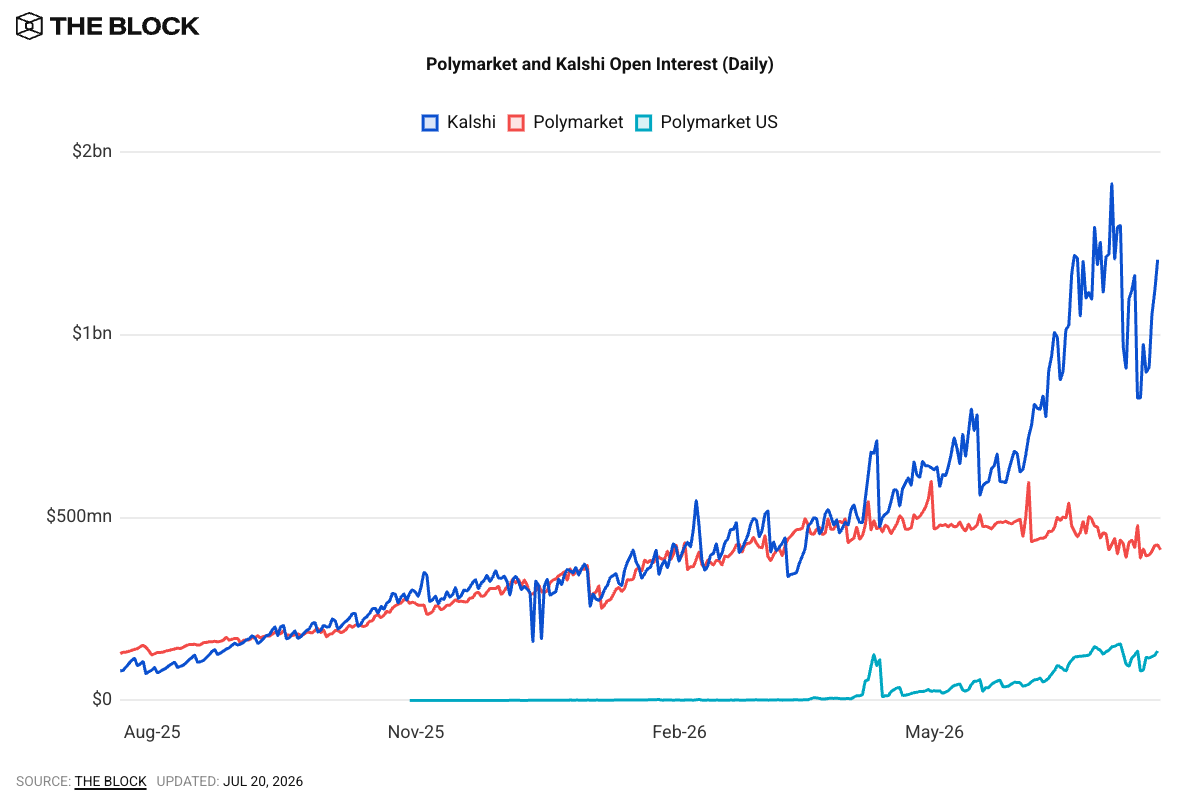
And what about the futures markets? They enjoyed their moment in the spotlight during the World Cup, but are now already winding down. The combined open interest of Kalshi and Polymarket has fallen by 20 per cent from its peak in early July, whilst sports betting volumes have dropped even more sharply with the end of the tournament. It’s the classic catalyst effect: when the matches end, betting liquidity dries up and the market settles back into a more measured rhythm. Until the US mid-term elections, activity is likely to remain subdued, with less narrative and less urgency to take on risk.
In today’s crypto market, it’s not those who make the most noise who win: it’s those who hold their ground when the noise dies down.