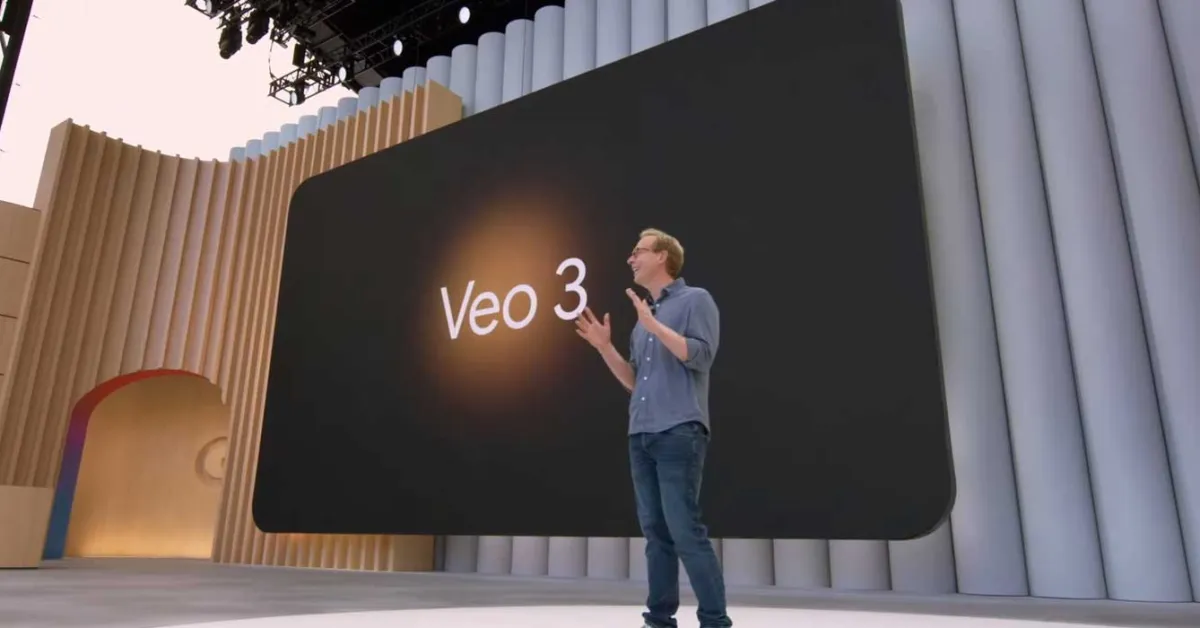
Google has just unveiled Veo 3, its most advanced model for artificial intelligence video generation. This is not a simple upgrade, but a real breakthrough in the ability of an AI to interpret natural language and convert it into fluid, realistic and cinematic visual sequences. After a long testing phase, the global rollout of the model marks a decisive step in the war between the AI giants, and positions Google as a dominant player in the generative video segment.
Unlike previous versions, Veo 3 is characterised by high temporal fidelity, consistency in transitions, advanced handling of complex perspectives and, not least, the ability to generate content up to 1080p while maintaining narrative stability. This means that from a simple phrase like ‘a girl runs through the fields at sunset’, the AI is now able to render not only the image, but the visual sensation of movement, light, and emotional dynamics.
For those in the blockchain and metaverse world, the implications are immediate. The creation of realistic and immersive content becomes instantaneous, tailored and scalable. Virtual environments, NFT game trailers, teasers of DeFi or Web3 projects can now be conceived and produced in minutes. The new generation of creators will be able to build worlds on video as easily as writing a tweet today.
But there is also another connection that does not escape the most observant: artificial intelligence is becoming the invisible backend of the digital financial language. Just as Bitcoin redefined trust in value, Veo 3 could redefine trust in visual authenticity. In an era where what is video is perceived as true, the risk of narrative manipulation and deepfake grows in proportion to the power of the tools.
And this is where the intersection with blockchain becomes crucial: decentralised mechanisms are needed to verify the origin and integrity of this content. AI creates, blockchain certifies. And while the world is divided between enthusiasm and fear, the fact that Google has decided to open Veo 3 to the global public suggests that the challenge has just been ignited.
Artificial intelligence-generated video is no longer a laboratory experiment: it is a language, an asset, and for some even a weapon. The only thing that remains to be seen is who will know how to use it best, before others do.
Here is the source:
https://techcrunch.com/2025/07/03/google-rolls-out-its-new-veo-3-video-generation-model-globally