Nvidia has reached an agreement to acquire Hugging Face, the open-source platform that has become the global benchmark for the development and sharing of artificial intelligence models, in a deal worth $12.9 billion. The announcement, made in early September, marks one of the most significant developments in the artificial intelligence sector in recent months: Nvidia, already a leader in hardware for model training, is now also acquiring the software infrastructure around which the global open-source community revolves. Jensen Huang’s stated aim is to scale the platform and broaden access to artificial intelligence for developers and institutions, whilst maintaining the open approach that has made Hugging Face a benchmark for the open-source community.
Hugging Face has over 18 million registered users and hosts hundreds of thousands of models, datasets and applications freely shared by the community, having evolved over the years into a sort of public infrastructure for open artificial intelligence. Nvidia is no outsider: it is already the leading contributor of open models to the platform, having published over five hundred models and two hundred and fifty datasets in recent years. This figure helps to explain the rationale behind the deal, which comes at a time when the debate between proprietary models and models with open weights is central to the sector’s future. Supporting the open ecosystem, according to Nvidia, means ensuring that innovation remains distributed and is not concentrated in the hands of a few technology groups that control both the models and the infrastructure to run them.
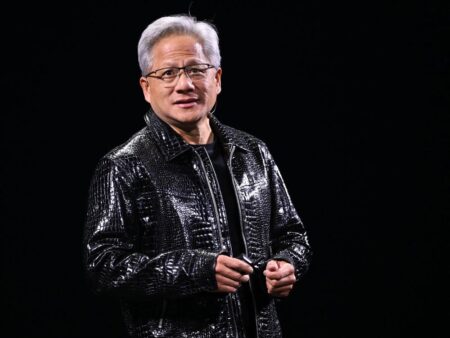
Jensen Huang, founder and CEO of Nvidia, commented on the deal in no uncertain terms: together, he stated, the aim is to make artificial intelligence more open, more capable and more accessible to people and organisations around the world. This message aims to reassure the community of developers that has grown up around Hugging Face, which is often wary of the sector’s increasing centralisation in the hands of the major players in cloud infrastructure and semiconductors. The platform’s founders remain involved in this new phase for the company, which must now prove that its promise of openness will hold up in the face of the arrival of a giant with a market capitalisation in the trillions.
For developers who currently rely on Hugging Face, the official message is one of continuity: the platform will remain open and multi-cloud, with no obligation to use Nvidia processors exclusively for training or running hosted models. It remains to be seen how long this promise will hold up, particularly given Nvidia’s strong interest in establishing its own infrastructure as the industry standard. For the artificial intelligence market, the deal consolidates the power of a company that already dominates the production of semiconductors for model training and which is now also acquiring one of the main distribution hubs for open-source software, fuelling the debate over how long open-source artificial intelligence can remain independent when those who fund it are also the ones who profit most from it.
Calling it a philanthropic acquisition of open source sounds good in press releases, but the reality remains that of a trillion-dollar giant buying the infrastructure on which half the world’s artificial intelligence runs. Nvidia promises developers freedom of choice: the very same freedom which, coincidentally, increasingly benefits those who own both the chips and the platform on which those chips are sold.