




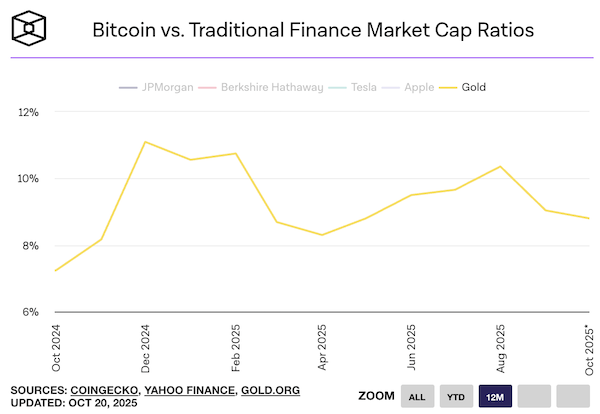
Over the past two months, the ‘digital gold’ narrative has been put to the test as rarely before, with the BTC/Gold ratio dropping towards typical historical oversold areas and gold hitting new highs, redefining the hierarchy of safe haven assets in the short term. Since mid-August 2025, the BTC/Gold metric has slipped by around 30 per cent, a retreat that several analysts read as a possible signal of accumulation, but which also captures the tactical preference for the yellow metal in an environment of elevated geopolitical and trade risk. Gold’s rally was fuelled by central bank buying and the fiat devaluation narrative, factors that historically catalyse flows into ‘hard’ assets when risk aversion rises.
On the regulated markets front, spot ETFs on Bitcoin experienced weeks of extraordinary volume in the face of mixed directional signals, a combination that speaks well of institutional indecision between tactical trading and long-term positioning. Mid-October reports indicate record activity and, on and off, net outflows on the BTC product complex, a mix that confirms how strong hands are exploiting volatility but without immediately turning it into new structural demand. At the same time, the macro data on global inflows into crypto ETPs signals that appetite is not dead, indeed it has reached record weekly peaks as bullish pressure has reappeared, proving that channelling via ETFs remains the preferred vehicle for institutional capital.
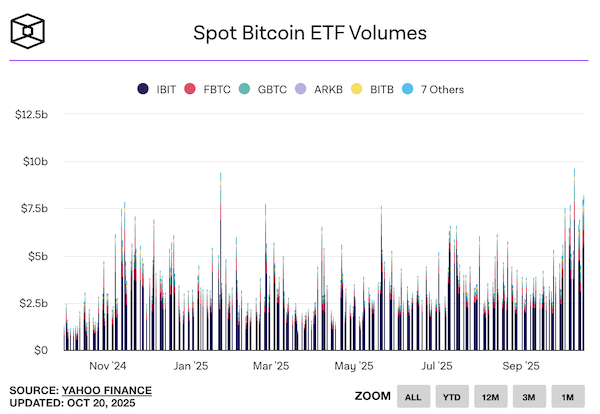
This growing intermediation changes the rules of the game for spot pricing: the more capital flows from listed products and treasury vehicles, the more the immediate impact on the spot order book tends to smooth out, redistributing the elasticity of demand over time. It is a structural shift that explains why high volumes do not always coincide with trend impulses, especially when desks use ETFs for dynamic hedging and rapid rotations between crypto and safe haven commodities. In parallel, Ethereum showed phases of inflows while BTC experienced outflows, a signal that allocators are experimenting with multi-asset centres within the digital ecosystem while maintaining narrative leverage over Bitcoin.
On the technical side, the YouTube video we cite here offers a focused reading on price structures and momentum signals, with an emphasis on how BTC’s rebounds in the context of maximum fear tend to build significant lows when sentiment is extremely depressed and volatility implodes after spikes. The analysis crosses cyclical indicators and correlations with macro assets to highlight the importance of retests on dynamic levels, a useful approach today when the BTC/Gold ratio signals statistically rare conditions. Herein lies the operational key: distinguishing ‘hot’ ETF volumes, often neutral or hedging, from the real spot demand that has historically triggered Bitcoin’s vertical rallies.
What this means, no pun intended: as long as gold drives the protection narrative and ETFs remain the battleground of flows, Bitcoin will have to win on the chart the right to return to ‘digital gold’, turning fear into volatility compression and then into clean breakout; when it does, it usually doesn’t warn twice.


