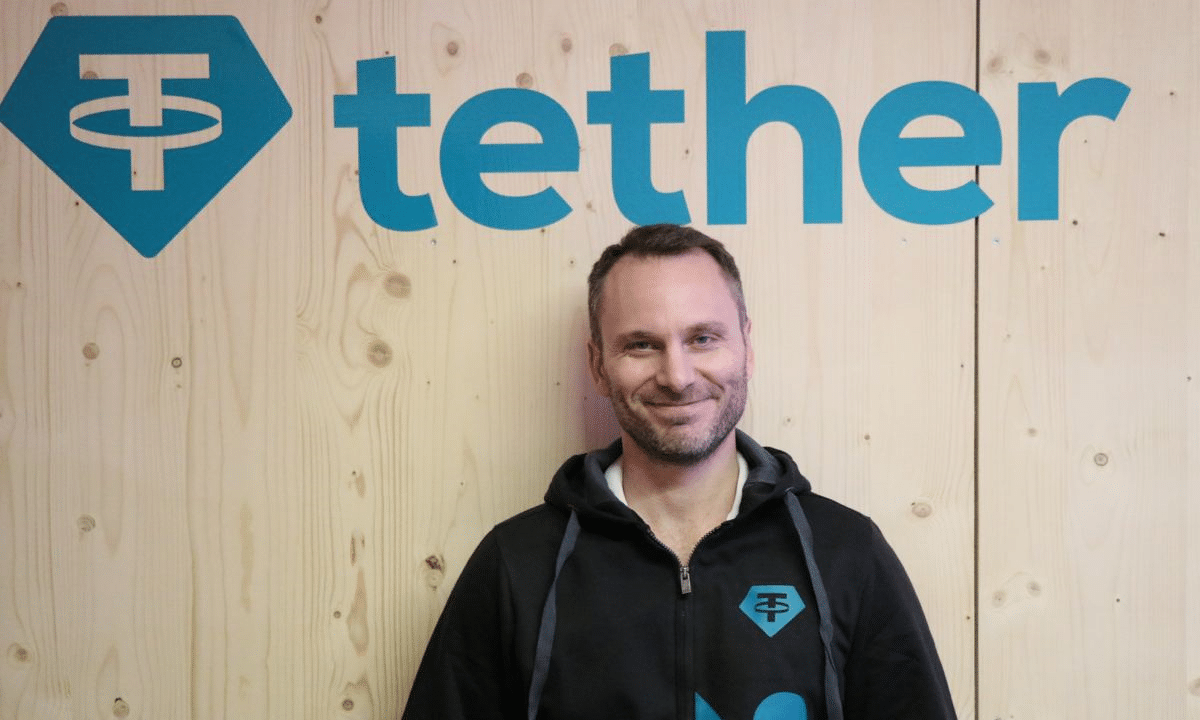
While the cryptocurrency market watches closely every move of Bitcoin and Ethereum, Tether Holdings is quietly writing a structural growth story that says more than any price chart. The company behind USDT, the world’s largest stablecoin with a market capitalisation of $185 billion, has announced that it will hire 150 new employees over the next 18 months, bringing the total workforce from around 300 to 450 by mid-2026. We are not talking about a cosmetic expansion, but an almost complete doubling of the workforce that marks the transition from an agile start-up to a global system infrastructure.
The most interesting detail is not the number, but the geography and specialisation of the hiring. According to reports in the Financial Times and confirmed by listings on LinkedIn, Tether is primarily looking for engineering talent to strengthen the technical infrastructure, but the recruitment plan goes far beyond code. Open positions include AI video producers in Italy, venture associates in the United Arab Emirates, and compliance specialists in Ghana and Brazil. It is a map that tells of diverse ambitions: not only to maintain and scale USDT, but to build a distributed ecosystem capable of navigating complex markets, responding to increasingly stringent local regulations, and investing in strategic projects that go beyond the traditional perimeter of stablecoins.
This acceleration in recruitment is not accidental, but follows a precise trajectory. Tether has seen USDT’s market capitalisation rise from around $140 billion a year ago to the current $185 billion, a growth fuelled by institutional adoption and structural demand for stabecoin liquidity in the DeFi and CeFi ecosystems. The more the volume of assets under management grows, the more critical it becomes to have teams dedicated to compliance, risk management, finance and technology. It is no longer enough to be ‘just’ the issuer of the dominant stablecoin: one has to be a private central bank, custodian, innovation lab and geopolitical operator at the same time. And this requires people, skills and local presence.
The expansion of Tether’s workforce comes at a time when the stablecoin industry is undergoing a global regulatory redefinition. In the US, the passage of the GENIUS Act paved the way for federal frameworks that make the market clearer (and more competitive), prompting Tether to launch USAT as a regulated product specifically for the US market. In Europe, the MiCA regime is imposing transparency requirements and caveats that only structured operators can meet. In this context, hiring compliance experts in Brazil and Ghana is not multicultural folklore, it is survival strategy: those who fail to demonstrate local compliance risk losing entire markets overnight.
Behind this expansion there is also a change in corporate philosophy. Paolo Ardoino, CEO of Tether, had previously criticised the practice of hiring aggressively during bull runs and then firing during downturns. The announcement of 150 hires spread over 18 months signals a more sustainable approach, less tied to market cycles and more focused on building permanent capacity. It is a signal that Tether is not playing the cycle, but building to stay, regardless of where the price of Bitcoin or Ethereum goes in the coming quarters.
The implicit message is clear: while traders watch the charts, Tether is hiring regulators, engineers and AI content producers. While the market debates whether we are in a bear market or a consolidation, the company is opening offices and building institutional relationships in different continents. And when a company that manages $185 billion decides to increase its workforce by 50 per cent in less than two years, perhaps the real signal is not in the price of USDT – which by definition remains at a dollar – but in the confidence that the industry is becoming big enough, complex enough and permanent enough to justify an army of 450 people just to keep a ‘stable’ currency rolling.