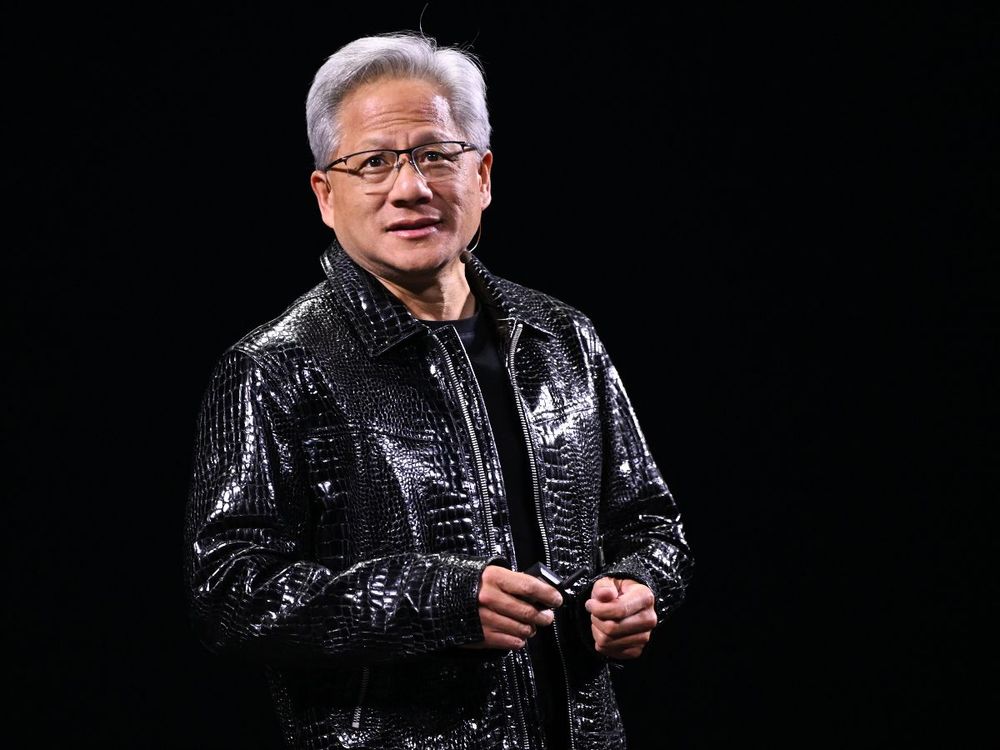
During the All In Summit in Los Angeles on 14 September, President Donald Trump rang Jensen Huang live on air whilst the Nvidia CEO was on stage talking about artificial intelligence. Huang held the phone to his ear for about a minute before managing, after some technical difficulties, to switch it to speakerphone in front of thousands of people in the hall. The incident, captured on video by those present, went viral on X within a matter of hours. During the conversation, Trump dismissed the most widespread fears about artificial intelligence as a hoax, even going so far as to joke about Huang’s difficulty in operating the speakerphone despite his technical expertise.
PRESIDENT TRUMP CALLED JENSEN HUANG’S MOBILE PHONE WHILE HE WAS ON STAGE AT THE ALL-IN SUMMIT TODAY. JENSEN ANSWERED AND PUT HIM ON SPEAKER 🇺🇸
Two days after Sam Altman and Dario Amodei called for AI development to slow down, Trump told a few thousand people what he thinks of… pic.twitter.com/ietGQJDp1W
— WOLF (@WOLF_Financial) 15 September 2026
The phone call came two days after an essay was published by Dario Amodei, CEO of Anthropic, in which the entrepreneur called on the industry to slow down the pace at which the capabilities of artificial intelligence models are being expanded – a position also publicly shared by Sam Altman, the head of OpenAI. Huang, on the other hand, has always distanced himself from this more cautious line, and was in fact discussing this divergence on stage at the All In Summit when the president’s call came through. This contrast reflects the increasingly visible rift between those driving the development of language models and those producing the hardware infrastructure on which those models are trained.
Trump was unequivocal:
Robots won’t take over. Artificial intelligence won’t take over the rest of the world. It’s all a hoax.
he said on the phone, adding that such alarmist claims ultimately benefit China and those who make politics out of the issue. On the subject of data centres – the physical driving force behind the race for artificial intelligence – the president spoke out personally:
‘They are the oil of the next twenty to twenty-five years; they are bigger than the internet – much bigger.’
he declared, before reiterating that ‘they are fantastic, and they make people rich’. Trump did, however, acknowledge the need for a degree of regulatory caution, explaining that:
‘We must proceed with caution, but that doesn’t mean we’ll bring an entire industry to a standstill.’
Jensen Huang seized the opportunity to reiterate his optimistic view of the sector:
‘We will ensure that everyone wins in the race for artificial intelligence in America – every sector, every company, every state, every person.’
he replied to the President, whilst the audience applauded. Trump’s public endorsement strengthens the already close ties between the administration and Nvidia’s CEO. For the market, it is a clear signal: the White House has no intention of slowing down the race to build data centres or imposing strict limits on the development of models, despite calls for caution from some of the sector’s leading figures themselves.
The US President phoning from the stage at a conference to reassure the audience about artificial intelligence, whilst struggling to work out how the speakerphone on his own phone works, sums up the state of the AI debate in America better than any press release: a great deal of loudly proclaimed confidence, very little desire to slow down, and technology that, in the meantime, carries on regardless, with or without the permission of those who fear it. The latter is the worst part.