Artificial intelligence is about to leave the smartphone screen to colonise users’ faces, and 2026 is shaping up to be year zero of the transition from lab experiments to consumer products ready for the general public. Just days before the Consumer Electronics Show opens in Las Vegas, the smart glasses ecosystem with augmented reality is experiencing an unprecedented moment of acceleration, with aggressive start-ups challenging the tech giants on a still virgin but extraordinarily promising terrain.
On the day before the official opening of CES 2026, Californian start-up Pickle Inc. dropped what many analysts are calling the bombshell of the year: Pickle 1, a pair of AR glasses that weigh just 68 grams but promise to function like a ‘Soul Computer’, a computer of the soul capable of observing, remembering and anticipating the user’s needs in real time. Unlike previous attempts at smart glasses that required explicit voice commands, Pickle 1 is built around the concept of proactive assistance. The device runs on PickleOS, a proprietary operating system that continuously collects contextual information and organises it into memory clusters, simulating the functioning of human memory through ‘memory bubbles’ that connect over time. The result is a digital assistant embodied in an interactive feline avatar that does not wait for orders, but proactively suggests recipes, gift ideas or reminders based on past conversations, shared plans and personal preferences learned over time.
The value proposition is disruptive: full-colour binocular display, working even in bright sunlight, powered by Qualcomm’s Snapdragon chip with ultra-low latency and one of the widest fields of view ever for such a device. Pre-orders are open at $799 with a $200 refundable deposit, and US shipments are scheduled for Q2 2026, followed by international availability. Pickle is clearly aiming to steal the show at CES, where giants such as Meta and Google will present updates to their existing devices, while AR specialists such as XREAL, LLVision and Mojie will unveil new offerings. Qualcomm, for its part, has already announced demos of the underlying technology that will power the next generation of smart wearables.
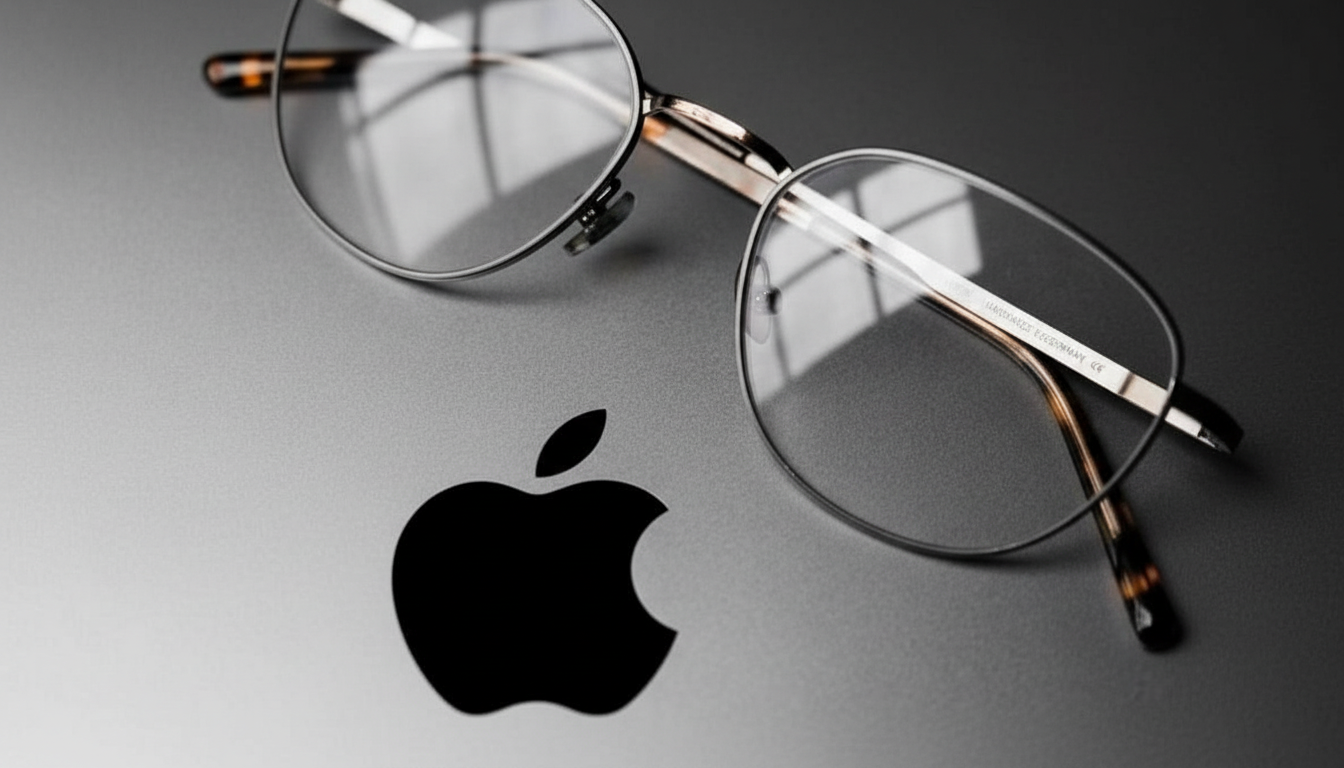
While Pickle is making noise on the public stage, Apple is working in the shadows with its usual surgical methodicity. At the end of December 2025, the US patent office granted Apple a new patent on its in-house design codenamed N50, the smart AR glasses that Cupertino has been developing for years. The technical document reveals innovative solutions on both the optical and mechanical fronts, addressing what Patently Apple calls a ‘critical’ problem that competitors, including Meta, have failed to solve completely: the precise positioning of optical components such as projectors and waveguides in perfect alignment with the AR display. Apple has designed a system in which the electronic housing near the display mount remains rigidly fixed to ensure stable optical alignment, maintaining a constant distance between the projector and AR display even during extended use.
But the real innovation lies in theeveryday ergonomics. Unlike traditional glasses, Apple’s design features forward-facing hinges at the front of the frame, while the temples are segmented into several parts: a hinged segment at the front, an elongated segment that extends to the ears, and an optional folding joint. All electronic components, including speakers, processors and batteries, are integrated into slim profiles that maintain the aesthetics of traditional spectacles and ensure comfort even for extended wearing sessions. According to Bloomberg’s Mark Gurman, Apple’s AR glasses are expected to support apps, voice control and contextual digital overlays on the real world, with a possible launch between 2026 and 2027. Apple’s approach reflects its established strategy of tightly integrating hardware and software to create premium AR experiences, positioning the glasses as a strategic addition to the wearable lineup after the Vision Pro visor for space computing.
CES 2026, which opened in Las Vegas in early January, is already emerging as the main theatre for this XR revolution. Samsung announced Project Moohan, its first extended reality visor designed for Android XR, the new platform jointly created with Google. The name itself, meaning ‘infinite’ in Korean, encapsulates the project’s ambition: to create an unlimited screen with endless possibilities that merges the physical and virtual worlds through virtual, augmented and mixed reality. Analysts expect CES 2026 to mark a turning point for AR hardware, with announcements from PC and component manufacturers, as well as innovations on smart home and wearables. Although Google has only recently started distributing development kits for its smart glasses, the buzz is palpable and the industry seems finally ready to turn visionary prototypes into mass-market products.
We are facing a paradigm shift that goes far beyond the technological gadget. When artificial intelligence stops living in a rectangle we keep in our pocket and literally moves in front of our eyes, the relationship between human and machine enters an intimate and potentially invasive dimension. The promise is seductive: freeing our hands, eliminating the distraction of the screen, experiencing the real world enriched by contextual information layers. The risk is equally obvious: handing over one’s daily perception to proprietary systems that observe, remember and predict our every move. Between Pickle’s ‘Soul Computer’ and Apple’s engineering elegance, 2026 is asking us an uncomfortable question: are we really ready to wear artificial intelligence like we wear a pair of sunglasses, or are we building the most comfortable cage ever designed?