On 25 March 2026, Google did something rare for a major tech company: it consciously accelerated the apocalypse calendar. Not out of drama, but out of seriousness. The company officially announced that the migration to post-quantum encryption must take place by 2029, not 2030 or 2035 as traditional timelines suggested. The reason? Three peer-reviewed papers published in three months have drastically reduced estimates of the number of physical qubits needed to break modern cryptographic algorithms, with direct implications for Bitcoin and Ethereum. The most disruptive paper comes from Google Quantum AI itself, co-signed by Justin Drake of the Ethereum Foundation…
Author: Redazione
New integrations with Figma and Canva on mobile, auto mode for Claude Code and Cowork using your computer: Anthropic is pushing towards the era of truly operational AI. Claude is going through a phase of evolution that has little to do with a simple ‘smarter chatbot’ and a lot to do with the idea of a complete operational hub for everyday work. The latest innovations announced by Anthropic all point in this direction: integrations with professional tools such as Figma, Canva and Amplitude now work directly from Claude’s mobile app, Claude Code introduces an automatic mode with an integrated security…
Tuesday 25 March 2026 will go down in Circle Internet Group history as the worst night since its listing: CRCL shares plummeted as much as 22%, wiping out in a matter of hours much of a rally that had taken the stock from around $60 to over $130 in the space of a few weeks. Coinbase lost nearly 10 per cent, dragged down because it shares a significant portion of the revenues generated by USDC with Circle. The entire crypto sector felt the brunt: Bitcoin briefly slipped around the $69,000 mark, and Ethereum suffered in the same timeframe, in a…
Thirteen years after the failure of Google Glass, Mountain View is at it again. And this time, judging by the prototype video shared on Reddit by product lead Dieter Bohn last week, something structurally different is emerging. Not a stage promise, but a working demo presented at MWC 2026 in Barcelona, with wearable glasses, a single integrated display and Gemini 3 running in real time above the user’s field of view. The most representative scene in the video lasts a few seconds but is worth a paper of analysis. Bohn stands in front of a poster of a football field.…
There is a precise moment when a tool stops being an assistant and becomes a colleague. Anthropic has just moved that boundary with the launch of Claude Code Review, a feature announced on 9 March 2026 that concretely redefines what it means to integrate artificial intelligence into the software development cycle. It is not an AI that suggests corrections when you ask for them: it is an autonomous multi-agent system that takes action on its own whenever a pull request is opened, without anyone having to press a button. The operation is elegant in its logic. When a developer opens…
There are decisions that at the time they are made look like corporate suicides. Then the market responds, and suddenly those same decisions seem like acts of strategic genius. This is exactly what is happening at Anthropic these days, and we at Blockworld anticipated it when we analysed the clash between the Pentagon and Anthropic: what might have seemed like a shot in the arm at the time is turning out to be one of the most effective brand moves in recent Silicon Valley history. To recap: the Pentagon had asked Anthropic to remove the ethical constraints preventing Claude from…
We are facing a point of no return in the history of artificial intelligence. Between the end of February and the beginning of March 2026, the relationship between Silicon Valley and the US military apparatus suffered a tectonic fracture. The catalyst for this earthquake has a name: Anthropic. CEO Dario Amodei ‘s clear refusal to bow to the Pentagon’s ultimatum (now renamed the War Department by the Trump administration) has triggered a chain reaction that is forcing the tech giants to throw off the mask, revealing where they stand in the new geopolitical and military chessboard. Anthropic’s ‘Red Line’ and…
The news on Pump.fun recounted in this article of ours, gives us a small but significant resumption of speculative activity on Solana after months of dryness. Here are the key details to better understand the nuances: The ‘graduation rate’ is the central metric. Pump.fun works like this: each token is born on a ‘bonding curve’, a mathematical price curve. To ‘graduate’, i.e. to become a ‘serious’ token, it must reach a certain liquidity threshold and migrate to a DEX (decentralised exchange) such as Raydium. This step is considered a sign of viability: it means that enough people have bought in…
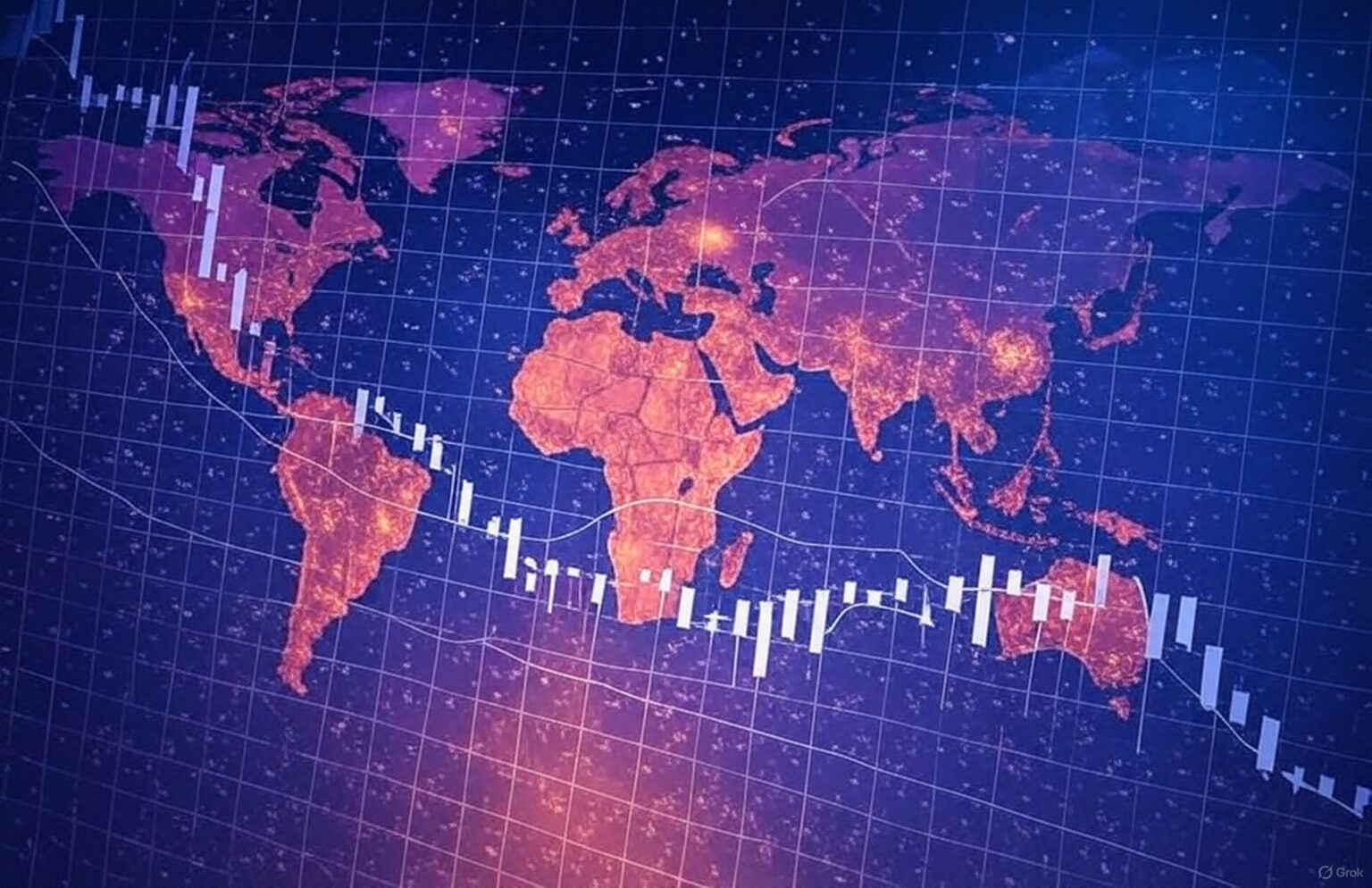
The cryptocurrency market lost more than half of its peak value. Total capitalisation has contracted to $2.37 trillion, the lowest level in 12 months and about 52% below the high of $4.38 trillion reached in October 2025. But to read the market as a homogeneous monolith on the way down would be an analytical error: what is happening is a sharp separation between assets, strategies and infrastructure, a rotation that rewards those who have built real moats and penalises those who have lived by narratives. Bitcoin is at the centre of this bifurcation. While it has fallen significantly from its…
Google has just raised the bar again, and this time in a way that is hard to ignore. With the launch of Gemini 3.1 Pro, the Mountain View team is not presenting a cosmetic update to its flagship model, but what the official blog unabashedly calls ‘the improved core intelligence that makes scientific and engineering breakthroughs possible’. The release is in preview mode starting today, distributed simultaneously across all major channels: Gemini API via Google AI Studio, Google Antigravity agent platform, Android Studio, Vertex AI for enterprise, and for consumers via the Gemini app and NotebookLM. Those paying for a…