



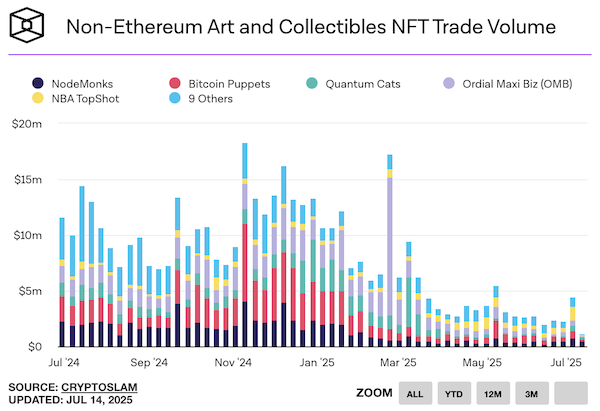
While Bitcoin is breaking new all-time highs, the cryptocurrency market is becoming loaded with speculative excitement, with a definite return to high-volatility assets. Among these, NFTs are experiencing a sudden and unexpected resurgence, especially within alternative ecosystems to Ethereum. In recent weeks, the trading volume of NFTs on non-Ethereum blockchains has exceeded $4 million, a significant jump after months of hibernation, marking a doubling from the previous week.
In strong bullish environments, NFTs historically act as amplified leverage over the performance of native tokens. They are high beta assets: when the market goes up, they go up more. And if the market corrects, they thud. But for now, the wind is blowing strongly upwards. It is in this scenario that Ordinals, NFTs built natively on Bitcoin’s blockchain, emerge. Once considered a heresy by some code purists, they are now among the most talked-about assets in the ecosystem, and not by chance: Ordinals trading volume has exploded, with floor prices of the most robust projects up 50% in just a week.
The Ordinals protocol allows data to be written directly to individual satoshi, creating unique digital artefacts on Bitcoin‘s blockchain. It is a silent but powerful innovation that is redefining the boundaries between fungibility and collectability, without having to leave the original environment of the king of cryptocurrencies.
Even the Ethereum world, despite fierce competition from L2 and chain alternatives, continues to maintain cultural leadership with iconic collections such as CryptoPunks and Pudgy Penguins. These blue-chip designs have withstood market crashes by maintaining volume and visibility, establishing themselves as true status symbols of DeFi and as decoupled assets within sophisticated portfolios.
Unlike the boom of 2021, today’s fiction is no longer just about hype or colourful monkeys, but about cultural value, strong communities and digital identity. Speculation remains, of course, but it has evolved. Retail investors are returning, but alongside them institutional funds and DAO treasuries are starting to move in, seeking exposure to NFTs with liquidity and history.
Artificial intelligence, increasingly integrated into recommendation engines, art generators and predictive analytics, could give the sector a further boost. From identifying emerging collections to content creation, AI and NFT are forming a silent but explosive alliance. Those who do not realise this risk arriving when the floors will already be at the ceiling.


