



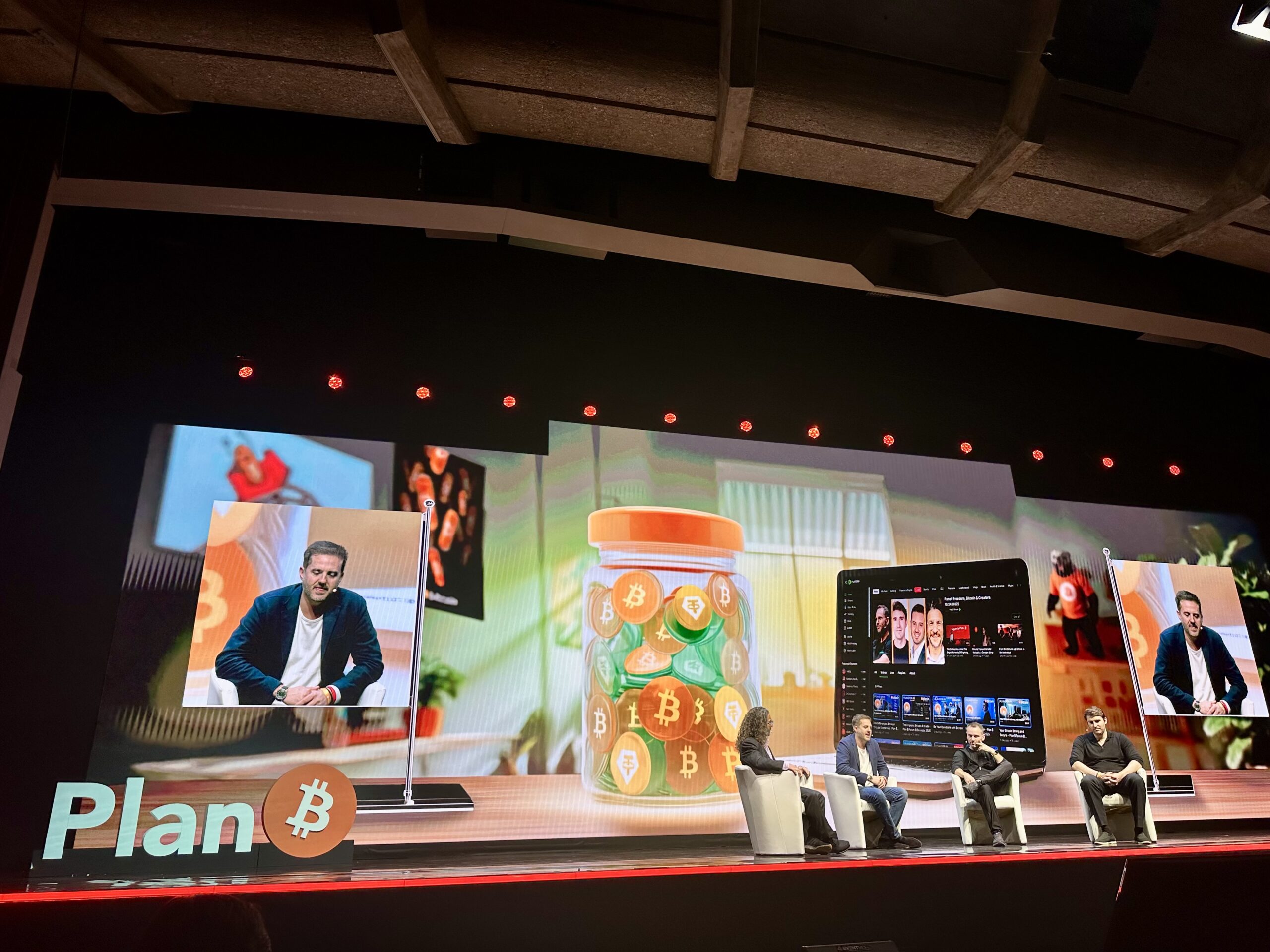
Here is the second and final part of our exclusive report from the fourth edition of the Plan₿ Forum in Lugano, held on 24 and 25 October 2025: it marked a turning point in the global Bitcoin narrative, transforming the Swiss city into a veritable laboratory of financial and technological innovation. The event, born out of the strategic partnership between the city of Lugano and Tether, brought together over one hundred world-renowned speakers, entrepreneurs, policy makers and long-time bitcoiners, offering unprecedented insight into how Bitcoin is transitioning from a niche asset to an infrastructure recognised by the most conservative financial institutions on the planet.
News by Paolo Ardoino
The beating heart of the conference was the presence of Paolo Ardoino, CEO of Tether, who announced the launch of Qvac, an open source local AI platform designed to bring artificial intelligence directly to personal devices, without reliance on the cloud. This move, inspired by Bitcoin‘s founding principles, reflects the ‘not your AI, not your intelligence’ philosophy, parallel to the famous crypto mantra ‘not your keys, not your coins’. Ardoino emphasised that Tether’s mission is no longer limited to issuing stablecoins, but extends to protecting individual freedom through resilient and decentralised technologies, from payments to artificial intelligence.
In parallel, Tether formalised the USDT (stablecoin dedicated to the US market) project in partnership with Anchorage, with the aim of expanding stablecoin adoption in a highly regulated market. This strategic move is a natural evolution for a company that has accumulated decades of experience in emerging markets, from Turkey to Indonesia, and now feels ready to tackle US regulatory complexity. With over USDT 180 billion in circulation and a 59.9% market share in the global stablecoin industry as of October 2025, Tether continues to dominate the digital liquidity landscape, acting as a bridge between traditional and decentralised finance.
The theme of Mining
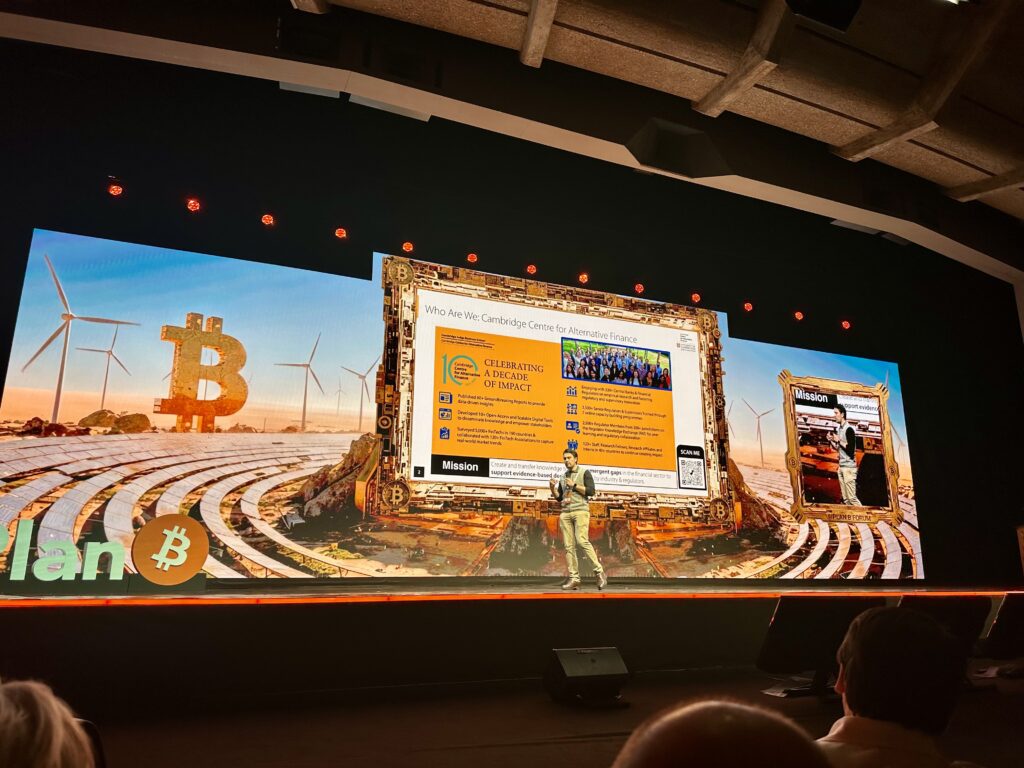
Another central theme that emerged from the Plan₿ 2025 conferences was that of sustainability in Bitcoin mining. According to the Cambridge Digital Mining Industry Report presented at the event, the use of sustainable energy in mining has risen to 52.4 per cent, up from 37.6 per cent in 2022, with a marked shift from coal to natural gas as the primary energy source. This shift led to a 43% reduction in CO2 emissions, demonstrating that the mining industry is actively addressing environmental criticism through technological innovation and energy diversification.
Data from the Cambridge Centre for Alternative Finance’s survey of nearly half of global mining activity also showedhardware efficiency will increase by 30% between 2022 and 2024, resulting in a reduction in the energy consumption required to generate the same computing power. This technological advancement is key to ensuring Bitcoin ‘s scalability without proportionally increasing its environmental impact, making mining not only more sustainable but also more economically competitive.
This struck us as a particularly interesting piece of information and caught the amazement of the entire audience present.
The Roundtables
During the panel discussions, a lively debate emerged on the future of Bitcoin node implementations and relay policies. Luke Dashjr, developer of Bitcoin Knots, emphasised the importance of diversification of implementations to avoid centralisation of decision-making power, while other speakers highlighted how standardisation around Bitcoin Core ensures greater security and compatibility in consensus. The discussion touched on advanced technical issues, such as on-chain spam management, inscriptions, and the need to balance freedom of use with network efficiency. This kind of public discussion demonstrates the maturity of the Bitcoin community, capable of openly addressing technical trade-offs without compromising the fundamental decentralisation of the protocol.
The presence of Brandon Lutnick, president of Cantor Fitzgerald, brought a leading institutional perspective. Lutnick talked about his company’s rebirth after 9/11 and how resilience is a shared value with the Bitcoin ecosystem. Cantor Fitzgerald has positioned itself as a bridge between Wall Street and the crypto world, launching Bitcoin lending initiatives and financial products backed by gold and Bitcoin, aimed at institutional investors seeking exposure to digital assets without giving up familiar structures. This convergence between traditional finance and crypto represents one of the most significant developments to emerge from Plan₿ 2025.
Venture investments
On the venture investment front, the panel on Bitcoin allocation strategies explored the differences between direct ownership, ETFs, equity proxies such as miners and innovative treasury companies. Julian Figueroa of 1031 Ventures and other investors agreed that direct ownership of Bitcoin in self-custody should be the core of any crypto portfolio, with riskier vehicles such as treasury companies or startups reserved for sophisticated investors seeking alpha. This hierarchy of risk reflects the maturation of the market, where exposure options multiply but the basic principle remains the same: not your keys, not your coins.
Rumble
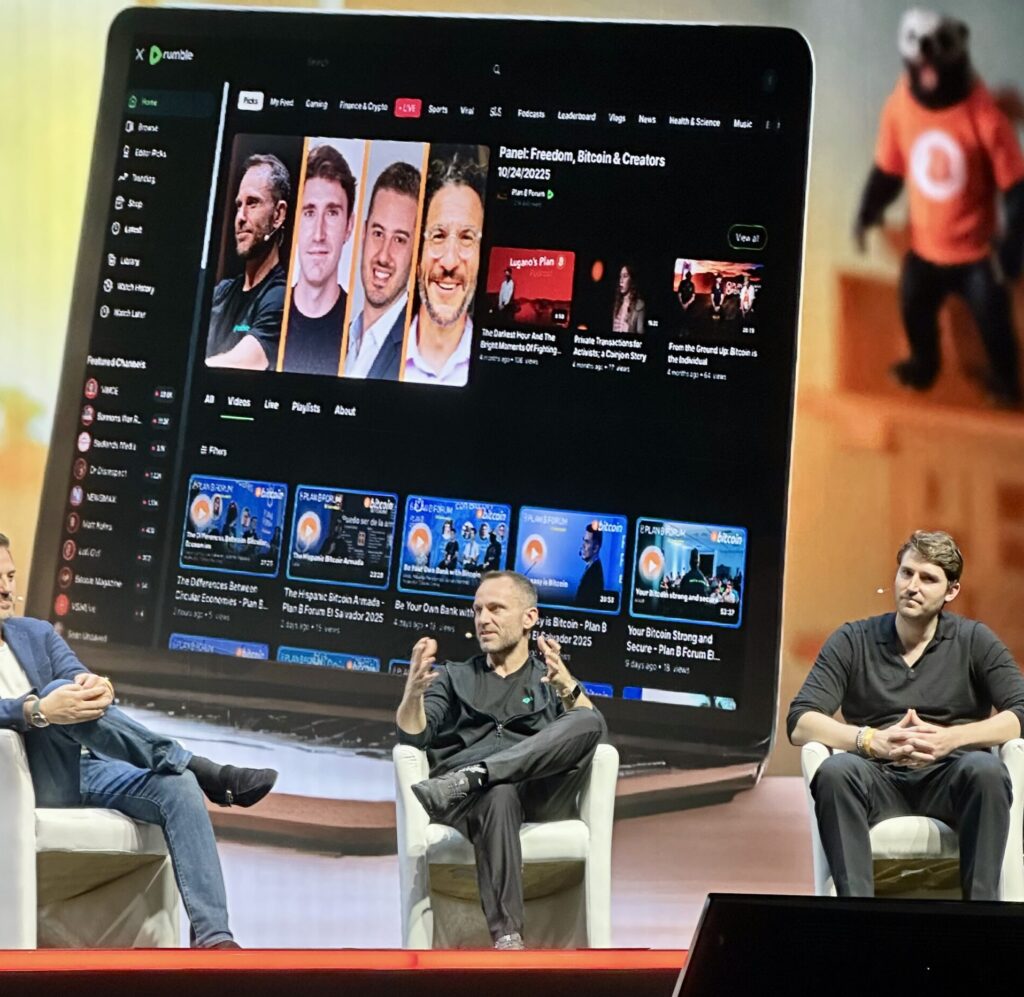
The collaboration between Tether and Rumble, a video streaming platform with 51 million monthly active users, is another concrete step towards mainstream adoption. The integration of Bitcoin wallets with savings functions and Lightning payments directly into the platform will allow creators to monetise their content globally, without banking intermediaries, cutting transaction times and costs. This decentralised creator economy model could become the standard for millions of users who have never owned Bitcoin, facilitating onboarding through a familiar and integrated user experience.
One of the most interesting aspects that emerged from the conferences was the emphasis on the user experience. Paolo Ardoino candidly admitted that despite technological advances, the user experience in the Bitcoin world has not improved significantly in the last five years. Most of the global population does not have the time or the skills to securely manage private keys and seed phrases, making it essential to develop solutions that balance security and simplicity. This self-criticism from one of the industry leaders highlights the realisation that mass adoption requires not only technological innovation, but also accessible and intuitive design.
What PlanB left us with
Plan₿ Lugano 2025 demonstrated that Bitcoin is no longer just a frontier technology for enthusiasts and idealists, but a mature financial infrastructure recognised by banks, institutional funds, governments and multinationals. The event highlighted how the convergence of traditional and decentralised finance is accelerating, creating unprecedented opportunities but also new responsibilities for the Bitcoin ecosystem. The challenge in the coming years will be to maintain the founding principles of decentralisation, resistance to censorship and individual sovereignty while building bridges with the traditional world.
It is no coincidence that Lugano has become a sort of second home for many international bitcoiners. The Swiss city, with its pragmatism, its openness to innovation and its partnership with Tether, is building a replicable model for other cities and nations that want to embrace the Bitcoin revolution. The announcements, debates and connections born during Plan₿ 2025 will continue to generate effects in the years to come, consolidating Lugano as the European capital of Bitcoin and a global reference point for anyone who believes in financial freedom.
For more information and details on speakers and initiatives, the official event website is planb.lugano.ch.
See you at PlanB 2026.


