

We went to Plan₿ 2025 in Lugano and found something special: it had the air of the days when the narrative shifts forever, the conversations were not limited to cypherpunk dreams, but brought to the stage the real mechanics of the market migrating to Bitcoin, with large asset managers talking about tokenization as a new form of ETF, banks activating recurring savings plans and collateral in Bitcoin, and countries like El Salvador bidding to be model jurisdictions for digital compliant issuance. The word that ran through each panel was ‘access’: access to capital markets for emerging SMEs, access to 24/7 liquidity, access to regulated instruments with ‘Bitcoin-like’ UX. And in this access, Bitcoin was cited not as an ideological totem, but as the operating standard of an infrastructure that now speaks the language of institutions.
Tokenisation
Among the most advanced themes is tokenization: the deal flow is shifting towards fixed income, with coupon-paying bonds and a growing share of private equity and alternative assets brought on-chain, while ETFs are being reimagined as tokenized ‘wrapping’ already hyper-liquid instruments for pensions and global retail. The figure that raised the most eyebrows: over 1,200 companies, more than 100 banks and over 20 states are working on or probing digital issuance projects, with traditional issuers indicating a trajectory where 100 per cent of products become tokenized in 3-4 years. It is a change of latitude: no longer ‘if’, but ‘how fast’.
At the heart of the migration is a UX that does not seem experimental. KYC/AML-restricted transfer functionality on security tokens, eligible lists and jurisdictional controls are not “anti-crypto”: they are the passport needed to make real securities and bonds travel in a compliant perimeter, without giving up 24/7 portability and instant clearing. Yes, it is true: many logics remain off-chain, orchestrated by record-keeping agents, but the asset takes the digital form that allows for fractionalisation, more efficient settlement and Bitcoin compatibility.
Stablecoins
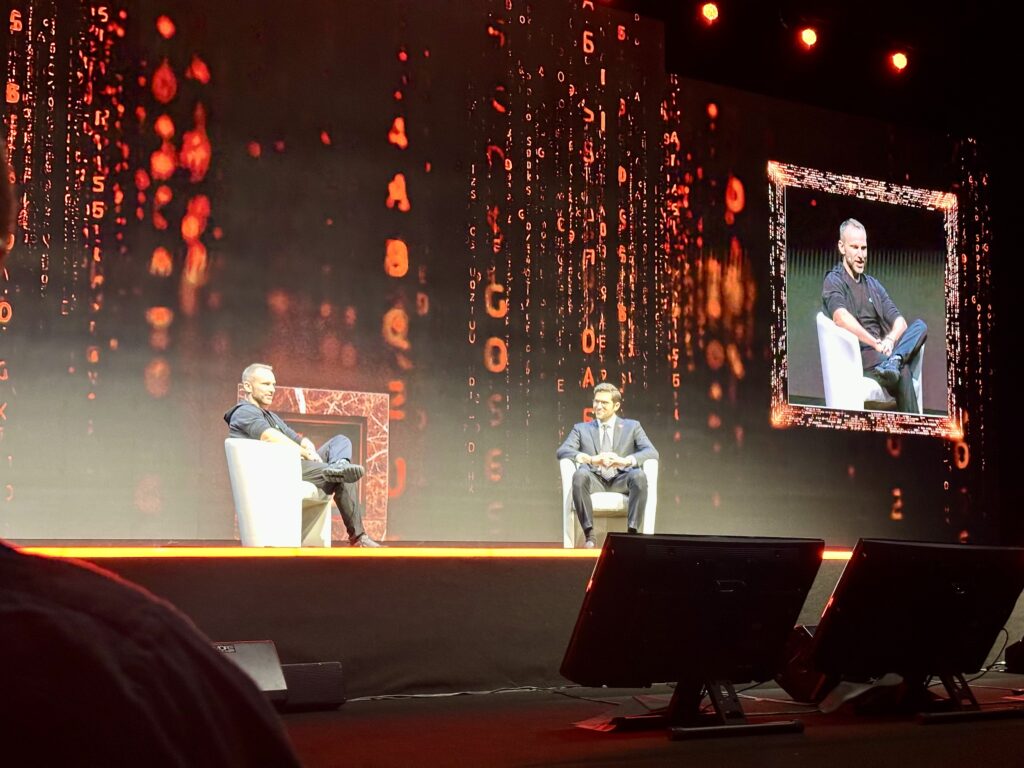
On the stablecoin front, there has been no turning back in Lugano: the share of crypto transactions travelling on stable tokens in many contexts ranges between 60% and 80%, a sign that utility is overcoming the speculative narrative. With USDT over 180 billion in value in circulation, adoption is focused on those without access to banking instruments or stable currencies: basic finance, payments and early entrants to capital markets in emerging regions. Here the pattern is clear: first dollar liquidity is digitised, then on-chain RWA portfolios are built, creating local capital pipelines for municipal bonds, relocated private equity and infrastructure debt. The bridge is already in place: creators and platforms that integrate wallets and payouts into stablecoins cut down time and intermediation, opening up direct and global monetisation.
Swiss banks have offered a concrete snapshot of the adoption curve: crypto product natively integrated, active user base growing from 25% to 35%, almost a third with regular accumulation plans in Bitcoin and collateral functions that clear the asset as ‘serious’ collateral, even on Sundays, because the network is alive 24/7. The organisational lesson is simple and powerful: start with trading and custody, scale up saving plans, enable transfer out with QR-simple UX, bring Lightning to in-house cash points, then open up to lending with collateral in Bitcoin in partnership with market players. Extensive education, risk governance and enterprise-level key management are the invisible scaffolding of this adoption.
The Bitcoin protocol: the most heated discussions
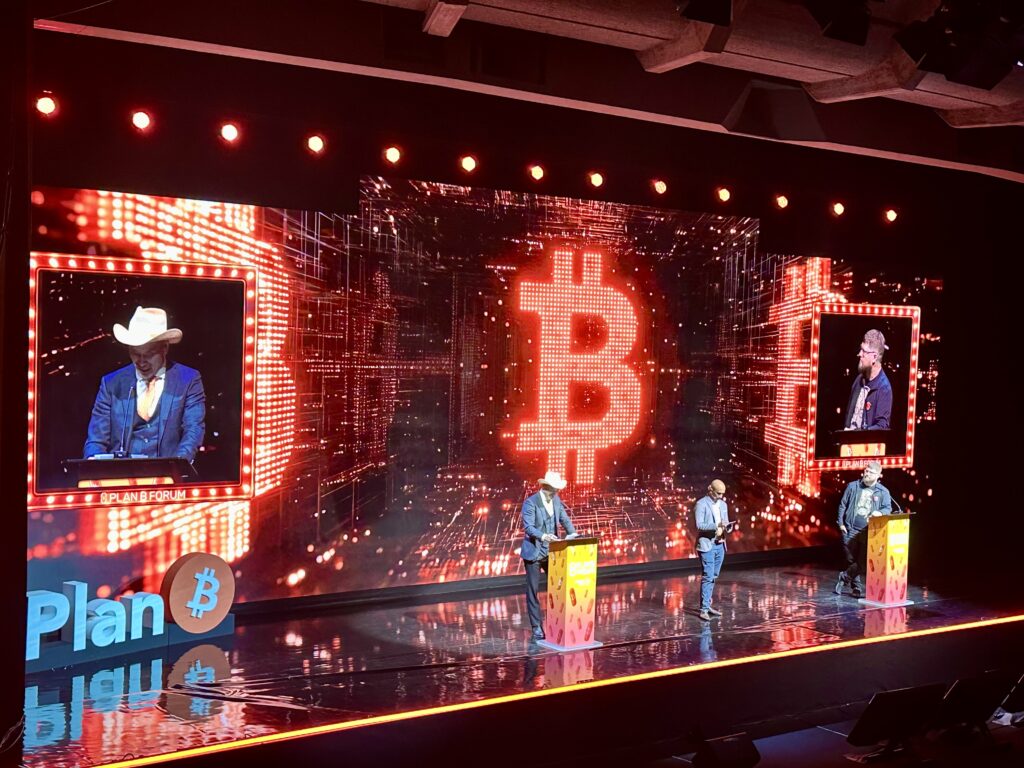
In parallel, the technical bar has been raised on resilience and network policy. The debate over Bitcoin’s spam, filters, standardness, and freedom of use has staged two sensitivities: those who want to prioritise monetary transactions through responsive policies and adaptive filters at the node level, and those who prefer to harden the consensus protocol to avoid unwanted side effects such as centralised mining or de facto blacklists. The tension is healthy: the common goal is to preserve censorship-resistance without denying usage evolution (ordinals, data, advanced scripts), while maintaining the efficiency of mempool and UTXO sets. It is the kind of friction that makes a protocol mature.
Another hot topic: quantum risk. The panel made it clear that defence is not a magic button but a marathon of standards, BIP, hardware and software wallets, with proposals like BIP 360 and the adoption of post-quantum signature schemes offering a soft-fork path to protection. The critical point is not only cryptographic, it is economic: advance coordination is needed to avoid catastrophic key-rotation rushes that saturate blocks for months, while the incentives of large holders (ETFs, funds, treasuries) may diverge on drastic cures. Here the maturity of the industry is measured by its ability to give itself a deadline before the punch in the face.
The El Salvador case provided a regulatory compass: clear definitions distinguishing security tokens from other instruments, upstream exclusion of scam models, exportable legal frameworks. Thus on-chain securitisation becomes viable for traditional issuers and not just narrative. And the Liquid network has been cited as the ‘stealth leader’ for STO and RWA with concrete examples: hash rates and upstream mining nodes as structured collateral, securitised and listed private bonds, supply chains financed in Mexico with triple-digit monthly growth. These are signs of ‘real demand’ enabled by the format, not showcases.
Finally, the triangle of platforms, wallets, payments shows how mainstream adoption is being built: integrated wallets with local on/off-ramps in 160 countries, instant payouts in stablecoin for creator economies, optimised fees on bank transfers, and above all a UX that mimics the online banking that users know, savings account in Bitcoin, current account in dollars, conversion only for use, hoarding on the scarce standard. It is the hybrid that removes friction today and wins loyalty tomorrow.
These are the most important trends we “intercepted” in this first report of our live presence in Lugano, don’t miss the second part tomorrow. If it seems too bold, that’s because it is: finance does not change by asking permission. In Lugano, in 2025, it has simply found its accent.
For more information, the event’s official website is planb.lugano.ch.